
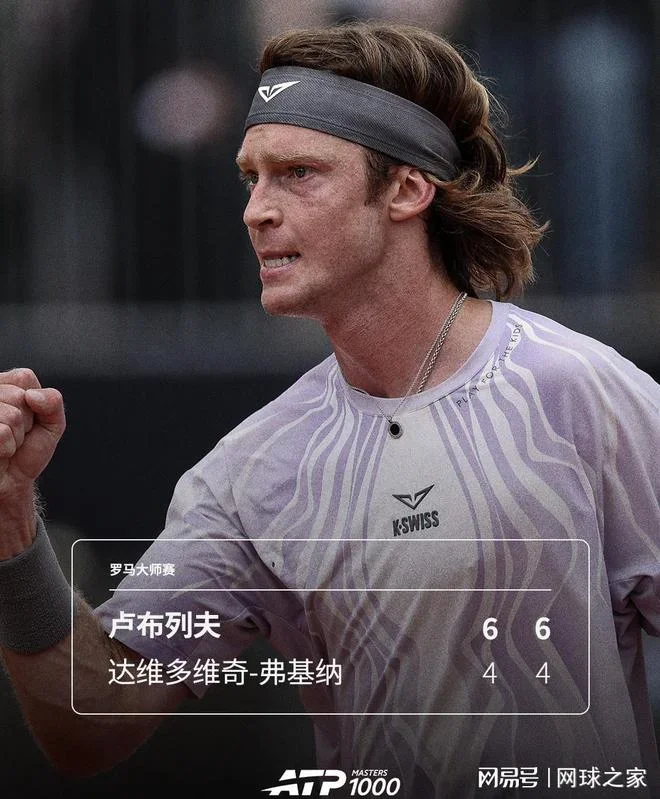
During the third round of the 2026 Rome Masters, 12th seed Andrey Rublev defeated 21st seed Alejandro Davidovich Fokina in straight sets (6-4, 6-4) to advance to the round of 16. In a post-match interview with Tennis Channel, the Russian star unexpectedly delivered a conversation far more thought-provoking than the match itself—tackling a classic tennis philosophical dilemma: Which is harder, reaching 10 Grand Slam quarterfinals or making 1-2 semifinals?
When the host posed this two-option trap question, Rublev’s reaction was genuine. He didn’t rush to defend his record or pretend to be modest. First, he admitted he wouldn’t pick a specific Grand Slam—any surface, any draw—as long as he could reach the semifinals. This “no-preference” stance revealed his deep desire to finally break through that elusive barrier: the Grand Slam semifinal, a ceiling he has always been just one step short of touching after years of cementing himself among the elite.
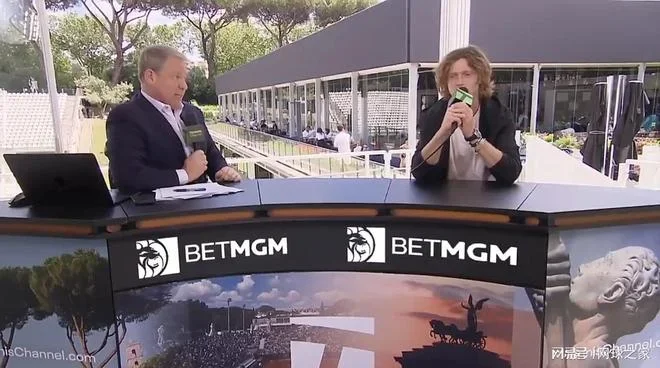
But then he shifted tone, reminding everyone: “I’ve already reached 10 quarterfinals, across all four Slams.” There was no boasting in his voice, only a quiet sense of being undervalued.
The host immediately added a weighty footnote: “I’ve seen many players reach semifinals, but they never made it to 10 quarterfinals.” That observation hit a truth often overlooked: in tennis, a flash of brilliance and long-term consistency represent two entirely different narratives. A player might catch fire at Wimbledon one year, beating tough opponents to reach the semifinals and grab headlines. But to consistently put your name on the second-week quarterfinal list across different surfaces and opponents for years on end requires a different kind of relentless endurance.
From a statistical perspective, Rublev’s achievement is indeed underappreciated. Ten Grand Slam quarterfinal appearances mean he has at least reached the second week of a major 10 times and won critical fourth-round matches. Behind this lies countless weeks of building confidence on the tour, careful management of form, and the ability to navigate injuries and tough draws. In contrast, one or two semifinal breakthroughs may rely more on a hot streak, fortunate draws, or an opponent suddenly falling off.
Of course, this is not to diminish the value of a semifinal. Professional sports ultimately focus on results; a Grand Slam semifinal means being two wins away from the trophy, a completely different psychological level and honor boundary. Rublev himself knows this well, which is why he said both are remarkable achievements. He didn’t belittle either path—he simply defended his own consistency.
The most memorable moment came when the host proposed a hypothetical trade: “Five quarterfinals for one semifinal.” Rublev laughed and replied, “Well, it depends on the market price, right?” That playful remark became the highlight of the interview. It defused the seriousness of the question while exactly capturing the brutal reality of competitive sports: in the eyes of fans, media, and even sponsors, a player who bursts into a semifinal once is often more memorable and more marketable than one who consistently reaches quarterfinals. The so-called “market” is never just about numbers—it’s about the bias of memory and the halo of narrative.
This conversation is worth savoring because it touches on an eternal tension in sports evaluation: How do we weigh peak height against sustained breadth? In tennis, an intensely individual sport, the answer varies from person to person. But Rublev offered a rare self-consistency—he acknowledged the allure of the semifinal while proudly owning his 10 quarterfinal appearances. He didn’t fall into the trap of comparing difficulty; instead, with humor, he questioned the very meaning of that comparison.
Perhaps, for players on the court, whether it’s 10 quarterfinals or one semifinal, the daily grind of training, the struggles of coming back from injury, and the nerve-wracking moments of big points all carry equal weight. The only difference is that some stories become legends, while others become stories of consistency.