
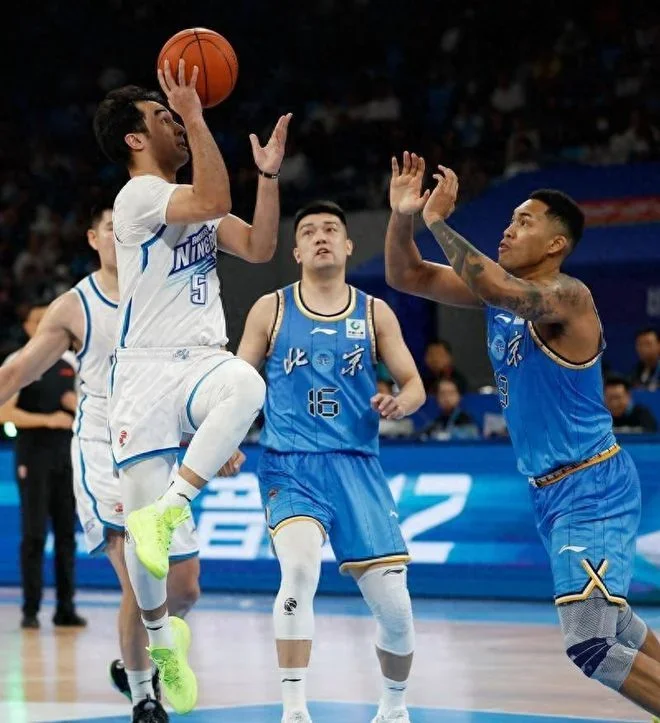
The Beijing-Guangdong Game 2 in the CBA playoffs ignited fierce debate among fans. While Guangdong’s young star Zhang Haojia delivered a buzzer-beating dagger, Beijing supporters lamented costly mistakes. Some even calculated that Beijing lost the game but could still make tens of millions of yuan from an extra home game. Was it a strategic surrender or just a slip-up? Let’s break down this epic clash.
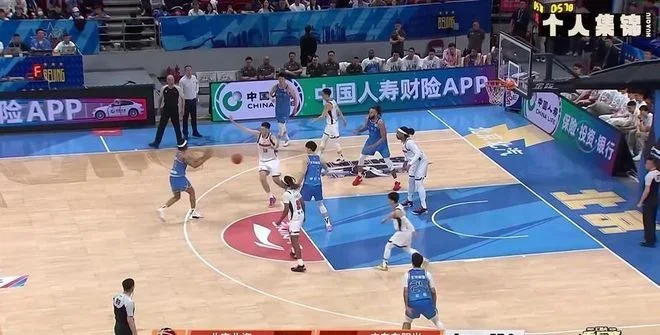
On the night of May 9 at the Dongguan Basketball Center, the tension was palpable during the final 30 seconds of overtime. Beijing had led by nine points at halftime, with Zhou Qi anchoring the paint and Zeng Fanbo stretching the floor. It looked like a sure win. But Zhou Qi’s seemingly safe pass turned into a gift for Guangdong.
When 1.78-meter Xu Jie snatched an offensive rebound from a forest of 2.1-meter giants like Zhou Qi and McGee, the crowd erupted. Instead of rushing a shot, Xu calmly dribbled around the baseline and found Zhang Haojia, who had just missed a three-pointer. The arena fell silent as everyone knew this shot would decide the game.
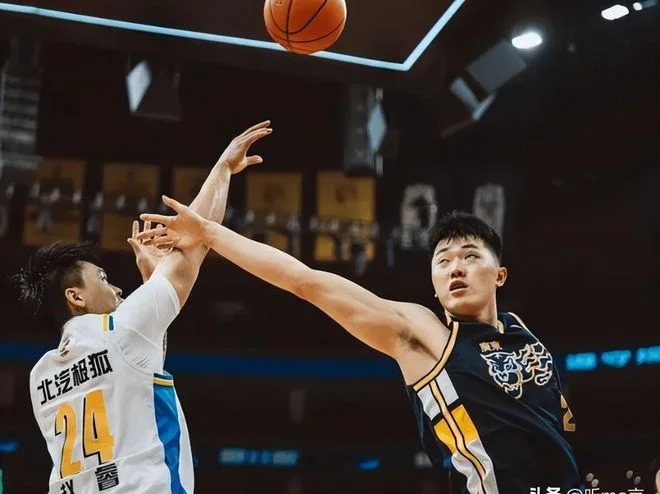
Zhang, who had been criticized all season and averaged less than three points per game, rose under pressure and drained a buzzer-beating three. The Guangdong bench exploded, while Beijing players stood frozen in disbelief. Even as a viewer, I was hoarse from shouting.
From the tip-off, both teams went all out. The first quarter ended in a 29-29 tie. Beijing surged in the second, leading 52-43 at halftime. Online comments favored Beijing to take the series lead. But after the break, Guangdong transformed.
Coach Du Feng adjusted brilliantly, avoiding an interior battle and using speed to break down Beijing’s defense. Pick-and-rolls constantly pulled Beijing’s big men outside, where they were burned by guards. Spelman and McGee struggled to contain switches, and Guangdong’s accurate shooting erased the deficit. By the end of the third quarter, Guangdong led by three.
The fourth quarter was a nail-biter. Both teams were exhausted, but Guangdong narrowed the gap to one point with six minutes left. In the final 30 seconds, Quan Quinn made one of two free throws to tie the game at 91. Beijing had the ball for a potential game-winner, but their three-point attempt missed, sending the game to overtime.
In overtime, energy was drained. Beijing scored first, Quinn hit a three to tie, and then Xu Jie assisted Hu Mingxuan for a three, putting Guangdong ahead. Beijing had a chance to respond, but Zhou Qi’s turnover killed their momentum. While mistakes happen in high-pressure playoff games, Zhou Qi’s error as a national team leader was costly.
Worse, on the final defensive possession, Beijing’s positioning was chaotic, leaving Zhang Haojia wide open at the 45-degree angle. Xu Jie passed to him with no contest, and Zhang drained the game-winner. Beijing didn’t lose due to lack of talent but because of lapses in key moments. They couldn’t execute offensively when leading, resorting to isolation plays.
The heroes of the game were Xu Jie and Zhang Haojia. Xu, only 1.78 meters tall, has always faced doubts about his height. But he not only orchestrated the offense smoothly but also grabbed that crucial rebound with sheer determination. His composure and court vision are invaluable. He’s no longer just a role player; he’s a core guard for Guangdong.
Zhang Haojia, backed by Du Feng but heavily criticized all season, silenced his doubters. Averaging just 2.8 points with a 29.8% three-point percentage this season, many called for him to be benched. But Du Feng trusted him for his defensive grit and understanding of the system. Zhang struggled early and missed five consecutive free throws in the fourth quarter, but when it mattered most, he didn’t hesitate. His confident shot was the perfect response, and his roar after the basket released an entire season of pressure.
For Beijing, key players underperformed. Game 1 hero Jermaine took a backseat in Game 2, scoring only 12 points. He was hesitant on drives, poor in shot selection, and turnover-prone. Guangdong’s aggressive doubles cut his connections with teammates, and he resorted to futile isolation plays. Coach Xu’s rigid rotation kept him on the floor too long.
Zhou Qi’s performance was also questionable. While his defense was solid, his crucial turnover shifted the game. This isn’t the first time he has faltered under pressure—his mental toughness remains a liability. Zeng Fanbo was neutralized by Guangdong’s defense, unable to find his rhythm.
Now the series shifts to Beijing’s home arena, Wukesong, for a decisive Game 3. Some say Beijing lost a golden opportunity, but others note the financial upside: an extra home game means millions in ticket and merchandise revenue. This has fueled suspicions of intentional losing. But in the high-stakes playoffs, no player or coach would deliberately forfeit a win. It’s more likely that Beijing’s poor execution in key moments handed Guangdong the victory—and an unexpected financial bonus.
The upcoming Game 3 promises drama. Beijing, with home-court advantage, could bounce back. Guangdong, having shown resilience, won’t let this chance slip. Regardless of the outcome, this Game 2 buzzer-beater will be remembered as one of the greatest in CBA playoff history.
Reference: CCTV Sports coverage of CBA playoff Game 2 between Beijing and Guangdong.